SLEEPY HOLLOW, 1998
A cozy, nostalgic reimagining of The Legend of Sleepy Hollow, delivered to your mailbox as letters, sketches, and artifacts.
A story told in six envelopes, arriving about once a week, taking you back to the era of cassette tapes, flip phones, and zines.
Your mailbox can be a scary place
If you’re anything like us, the only things you find in your mailbox are bills and junk mail. But back in the day, when you got something written especially for you, it brought surprise and joy. Wouldn’t it be nice to get something that felt like that again?
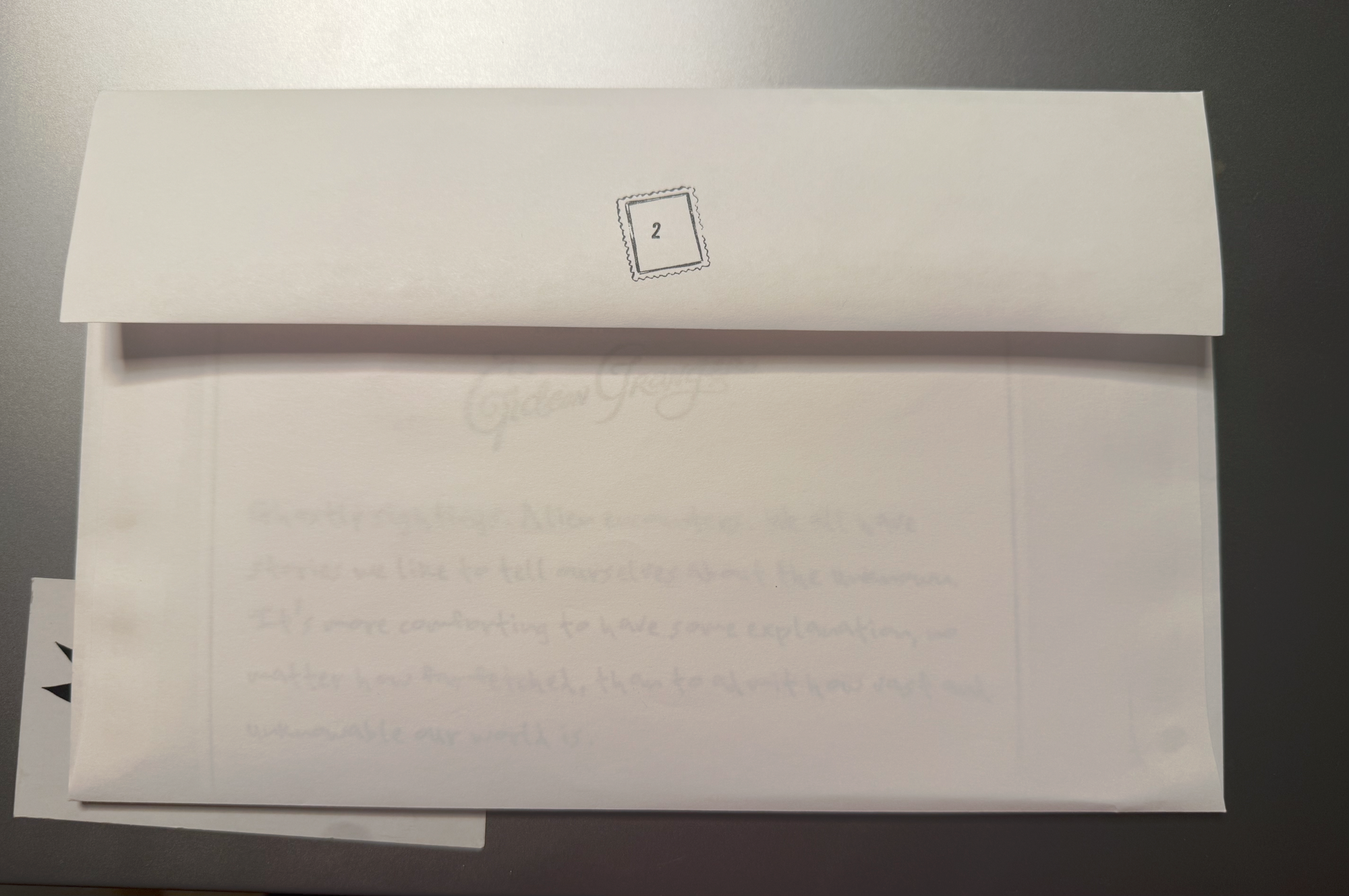
We† started thinking about a story that you could hold in your hands, that unfolds through letters and other surprises in each envelope.
We found the perfect tale to adapt into "storyletters," one where what seems to be happening is very different from what’s really going on beneath the surface.
A different kind of "Sleepy Hollow"
What do you remember about The Legend of Sleepy Hollow? The Headless Horseman and the horror vibes, most likely. Maybe the Disney animated movie, the tv detective series, or maybe the Scooby-Doo episode.
But the real story is very different. It’s not even really a horror story. It’s more gently spooky, sly and a lot of fun. It’s about a boy trying to make his way in the world, a girl trying to figure out who she wants to be, and a town that loves to tell stories.
We decided to bring that version of Sleepy Hollow to life, one more interested in an outsider trying to fit into a community with peculiar sensibilities, and the romantic triangle that ensues. It has more in common with the Stars Hollow of Gilmore Girls than any Tim Burton movie. (If Stars Hollow had a Headless Horseman lurking about.)
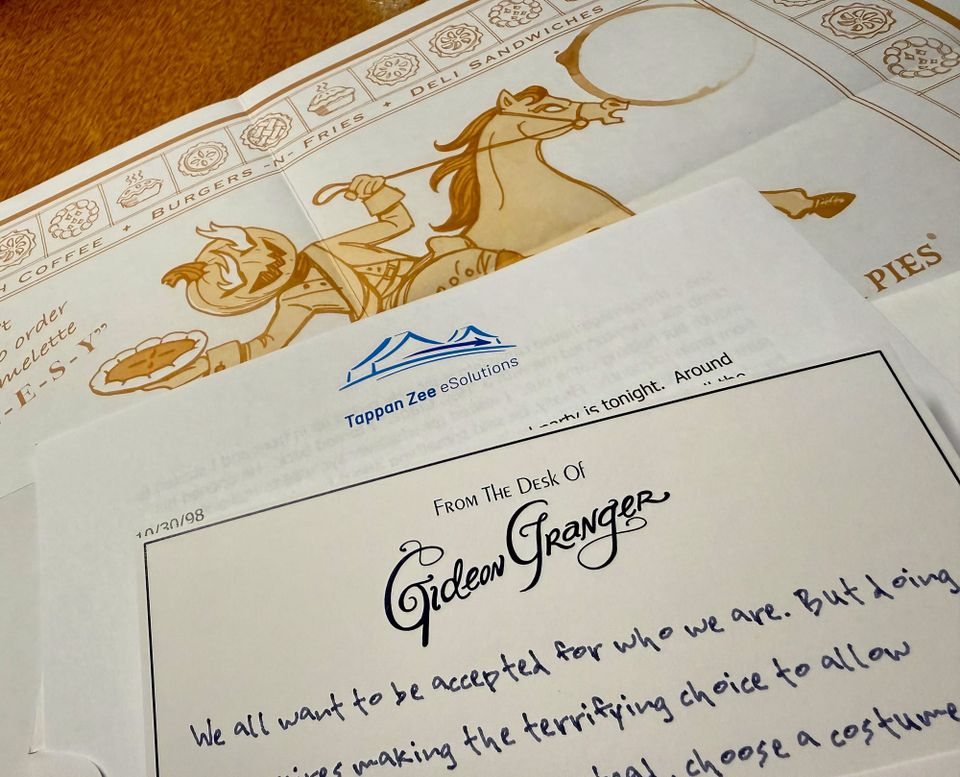
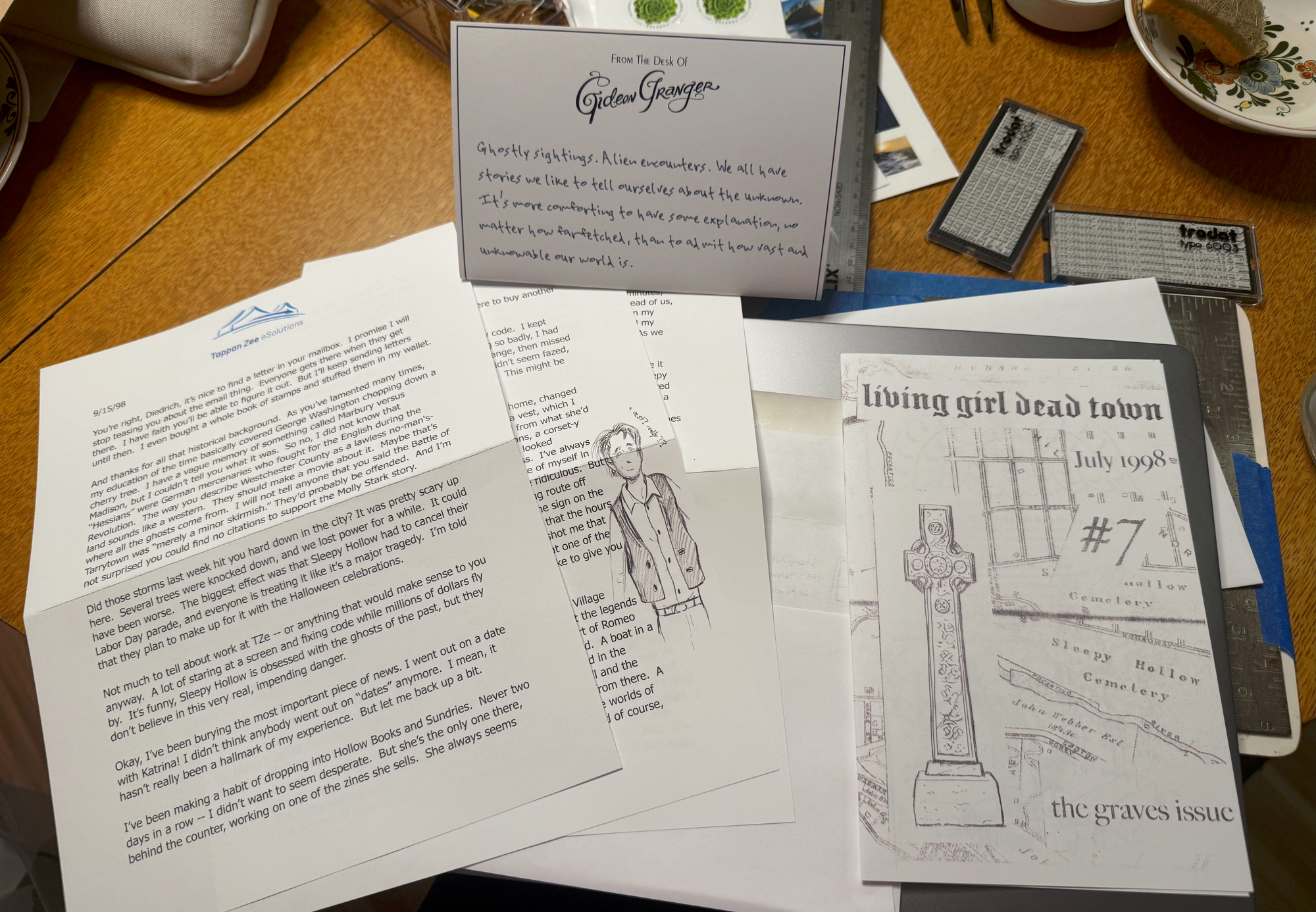
The story comes to you, right to your mailbox, over the course of six weeks. Each envelope includes a letter from Ichabod Crane, describing his exploits in Sleepy Hollow. Each will also include a piece of the storyworld – a sketch by Ichabod, a postcard, or some other 90s-flavored surprises.
Why the Nineties?
The nineties speaks to our nostalgia for what, looking back, we think of as a simpler time. The digital age was just being born, and it was the last moments dominated by physical media. We took a lot of inspiration for the tactile elements from the period: the aesthetics of zines, photocopied band flyers, and cassette mixtapes.
Also, in the original story, Washington Irving writes the tale he’s sharing happened thirty years earlier. And for us, thirty years before now is the 90s!